- Fruit
- Edible Oil
- Stuffed Pasta
- Crops Grains Oilseeds and Rice
- Grain Milling and Malt
- Vegetable Dried Beans
- Natural Plant Spices
- Nuts and Seeds
- Dried Fruits
- Unroasted coffee&cocoa beans
- Special Dietary Foods
- Functional foods
- Eggs and egg products
- Meat and meat products
- Aquatic products
- Aquatic Animals
- Dairy
- Casings
- Bird's Nest
- Bee products
- GMO
- Non-edible animal products
- Chinese Medicinal Herbs
- Plant-derived Fertilizer
- Cultivation Medium and Plant Propagation Material
- Regular Food
- Cotton Supplier Registration
Cultivation Medium and Plant Propagation Material
● Cultivation medium includes:
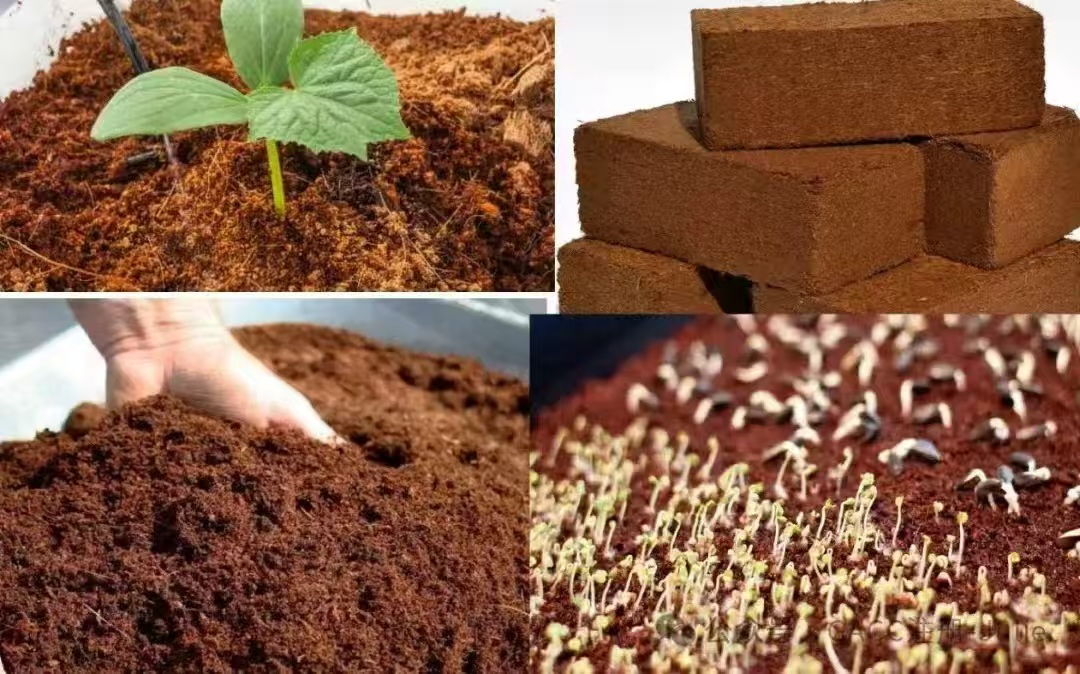
Coconut coir, coconut coir bricks, coconut coir blocks, coconut shell chunks, coconut shell bricks, coconut coir shreds, peat, peat moss, sphagnum moss, cork, sawdust, wood shavings, wood chips, bark, bark fragments, bark granules, palm fiber granules, palm coir, palm meal, palm shells, inactive moss, sphagnum moss, dried sphagnum moss, wood fiber, castor meal, perlite, akadama soil, rice husks , rice bran, rice husks, coffee husks, peanut shells, cottonseed husks, bagasse, grape pomace, cocoa pods, oil palm husk charcoal, etc., excluding soil. This includes single-type organic cultivation media, as well as mixed media composed of two or more of the above organic cultivation media, or containing inorganic cultivation media.
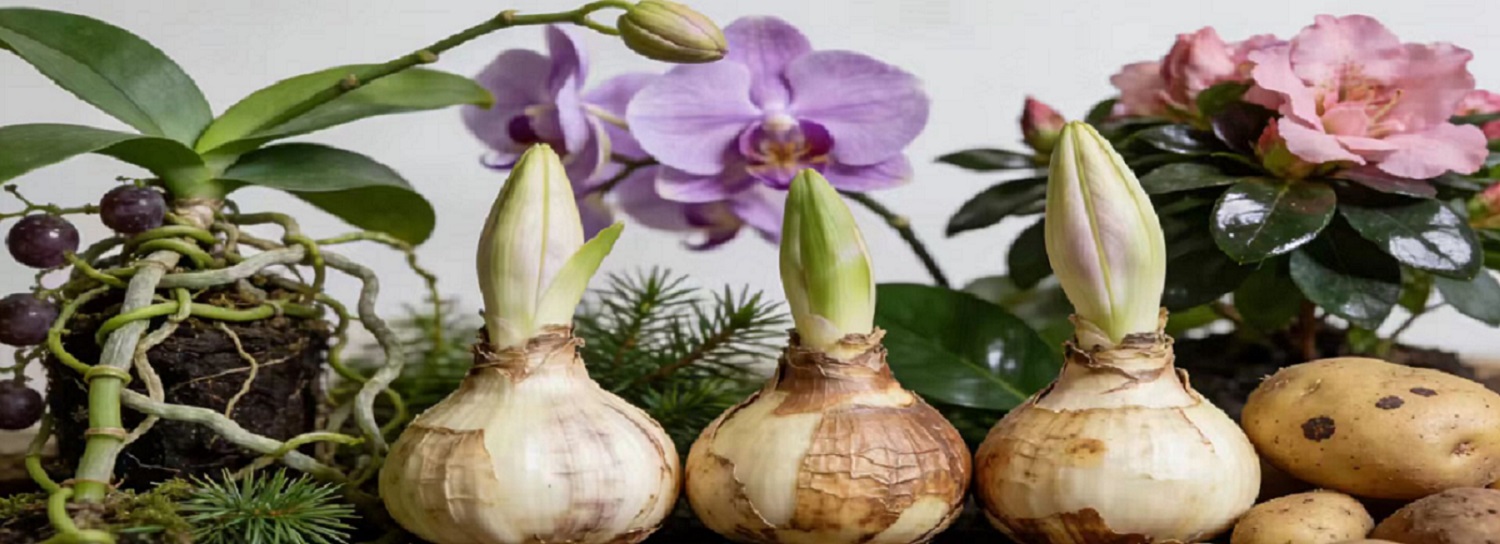
● Plant propagation materials
This refers to the collective term for plant seeds, seedlings, and other propagation materials, including the whole or part of cultivated and wild plants that can be propagated, such as plants, seedlings (including test-tube seedlings), fruits, seeds, rootstocks, scions, cuttings, leaves, buds, tubers, bulbs, corms, pollen, cell culture materials (including transgenic plants), lily bulbs, lily corms, oak sudden death disease host plants, potato seed tubers, potato mini-tubers, grape seedlings, Cymbidium, azaleas, Podocarpus macrocarpus, etc.


● Registration of overseas companies producing cultivation media
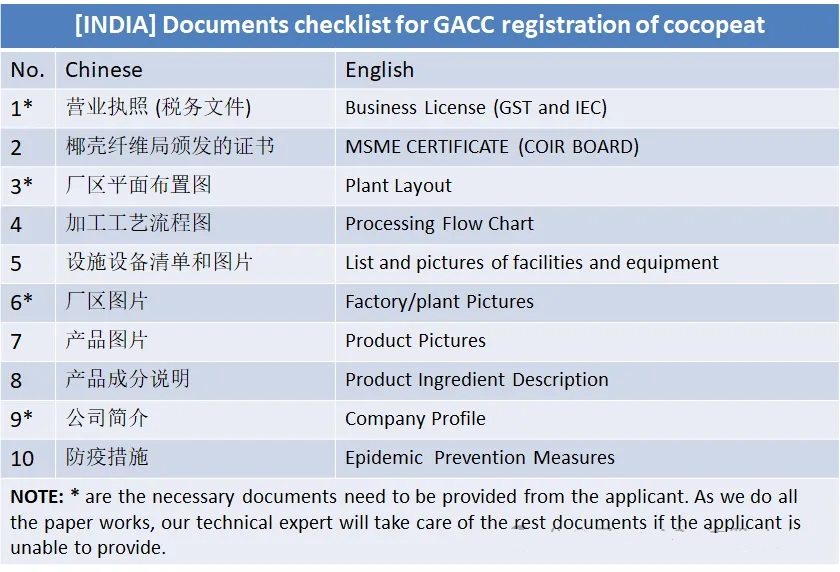
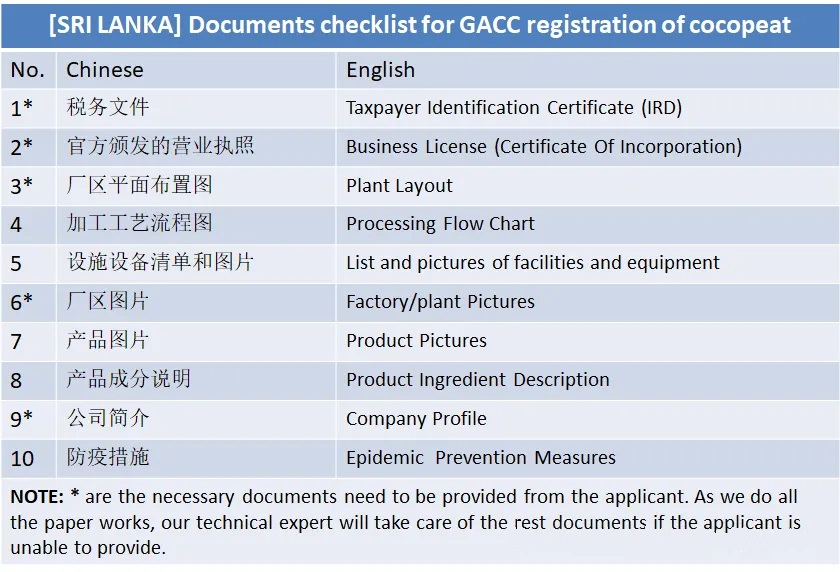
Enterprises producing, processing, and storing cultivation media must register with the plant quarantine authority of their respective country or region and be recommended to the General Administration of Customs. The recommendation information must include the enterprise name, registration number and address of the competent authority in the country or region, product types, main ingredients, production processes and processing technical indicators, and disease prevention and control measures (in Chinese or English). The General Administration of Customs will review the application, and upon approval, will register the enterprise and publish the information on its website.
For example, data from India and Sri Lanka are as follows:
● Important notes when applying for registration:
1. Correct type of enterprise
It should be an overseas enterprise that produces, processes, and stores cultivation media; overseas traders or agents do not need to register.
2. Correct official supervisor
It must be approved by the correct competent authority in the country where the overseas production, processing, or storage enterprise is located.
3. Correct information
The company's true conditions are reflected in the submitted materials, and the completeness, authenticity, and compliance of the materials must all meet the requirements.
4. The correct path and method
Applying for registration through the correct application process and methods is a prerequisite. It often happens that applications are submitted through the wrong overseas official channels or to the wrong Chinese customs authorities.
5. Pass customs review
Chinese customs authorities will review the completeness, authenticity, and compliance of the company's information, or conduct video or on-site inspections, and register the company after confirming that it meets the requirements.
● Remedies available:
1. Different countries have different governance structures, legal systems, and division of responsibilities among administrative agencies. Assistance should be provided to the relevant departments and direct officials in charge of plant quarantine in the country of origin.
2. Translate, organize, and supplement the required materials; there may be a possibility of notarizing certain materials as needed.
3. Guide applicants to submit their applications to the correct review department in China through the correct path and methods.
4. When the registration application process stalls due to communication barriers and information asymmetry, we will intervene to actively coordinate and strive to obtain a good result as soon as possible.
(Against situations where the submitted application contains false information is not eligible for relief.)
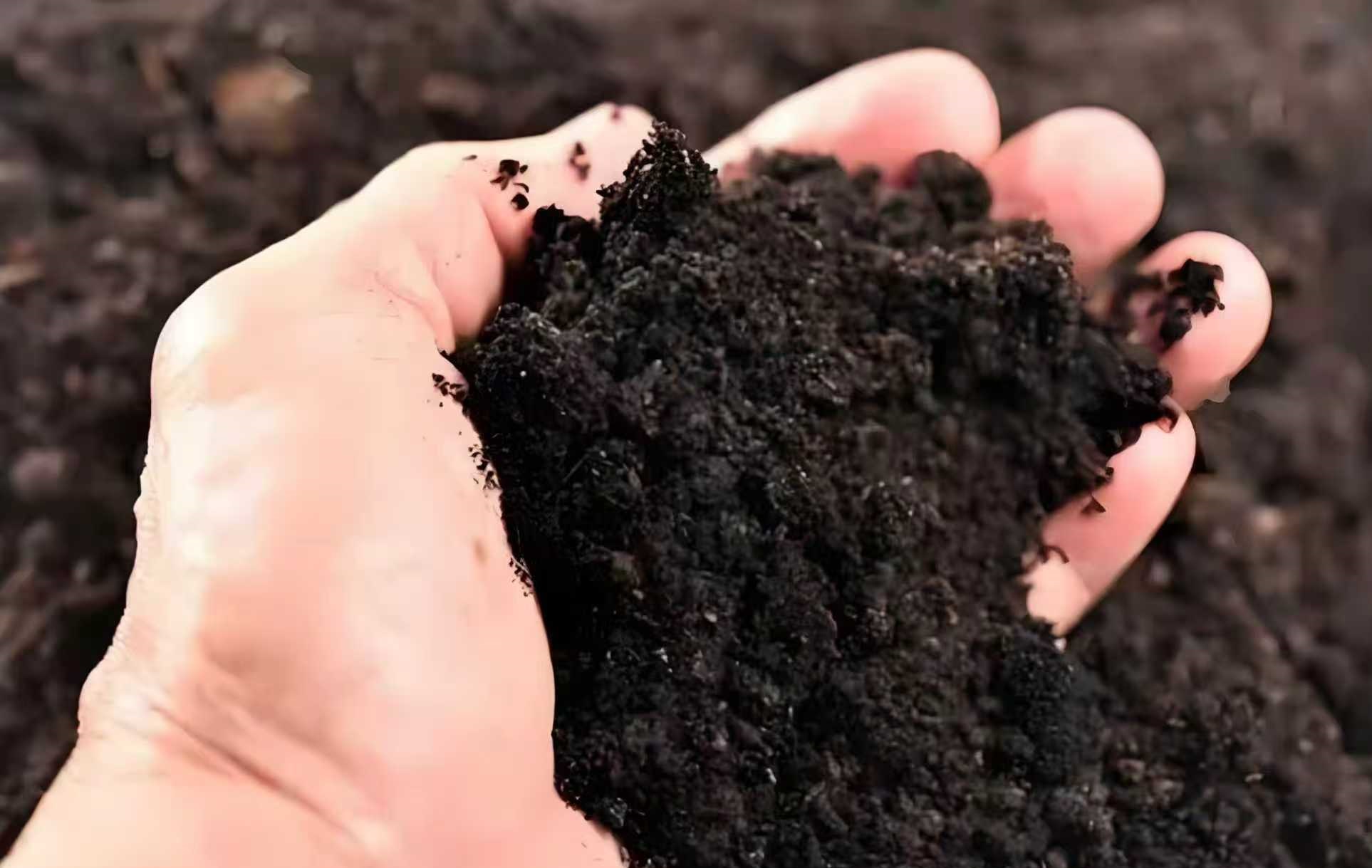
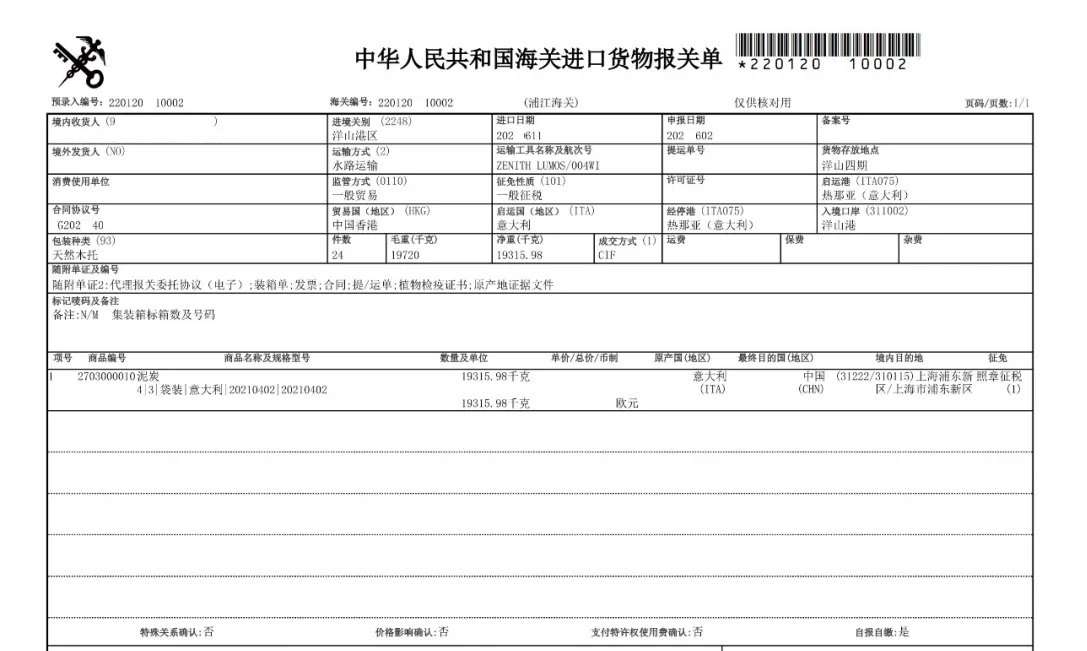
● Taking imported peat as an example:
The Customs Tariff Catalogue describes the product as: Peat (grass sphagnum moss) (organic mineral body formed by the accumulation of dead and decaying above-ground plants in swamps (wetlands) (whether dry or wet)) (cultivation medium)
Customs Code: 2703000010
CIQ Code: 101
13-digit customs code: 2703000010101
Regulatory requirements and required documents for customs declaration:
1. Before importing, it is necessary to confirm that the production, processing and storage companies of the cultivation medium have obtained an export number to China. Overseas traders or agents do not need to register.

2. Required documents and materials:
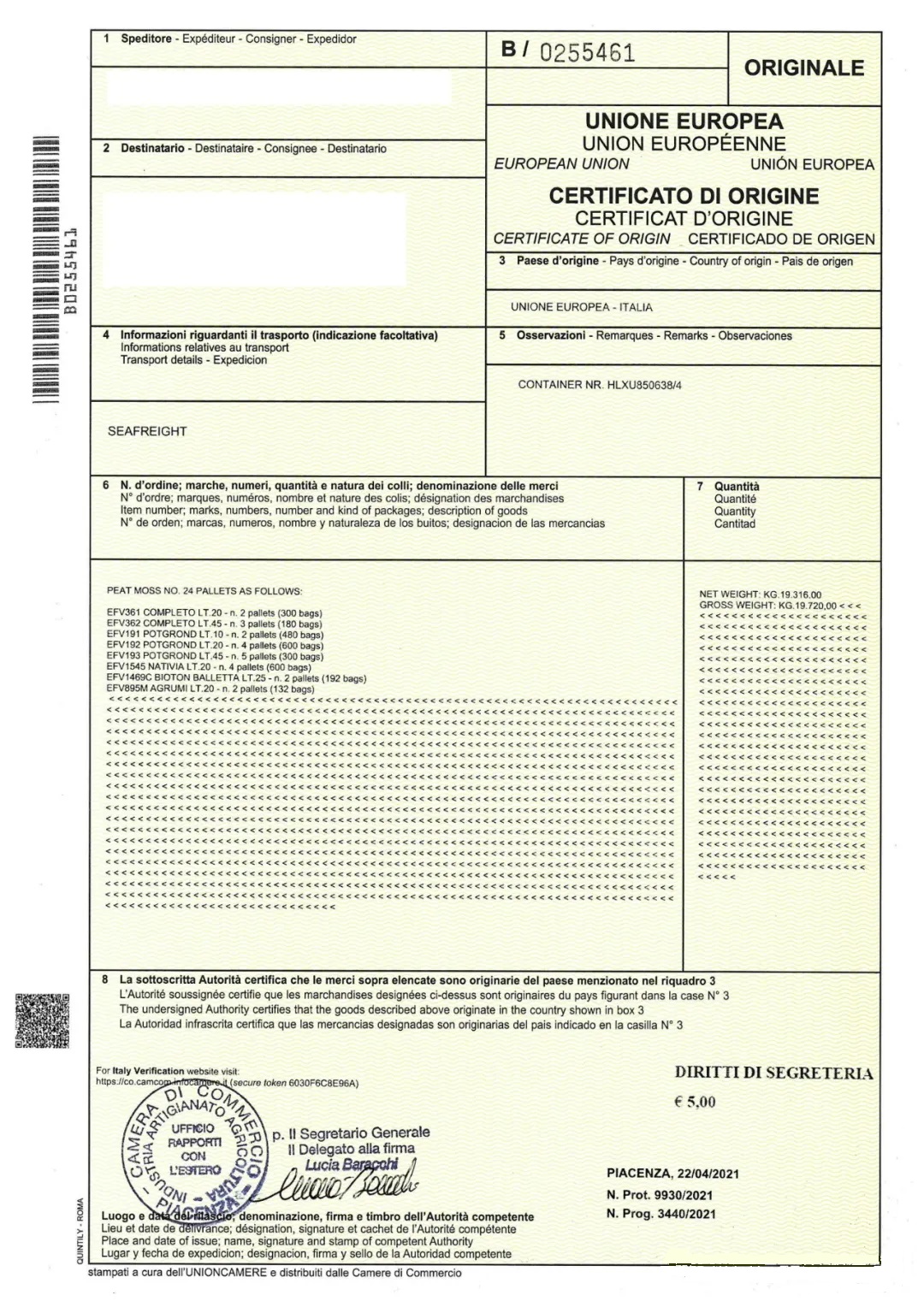
( 1 ) Certificate of Origin
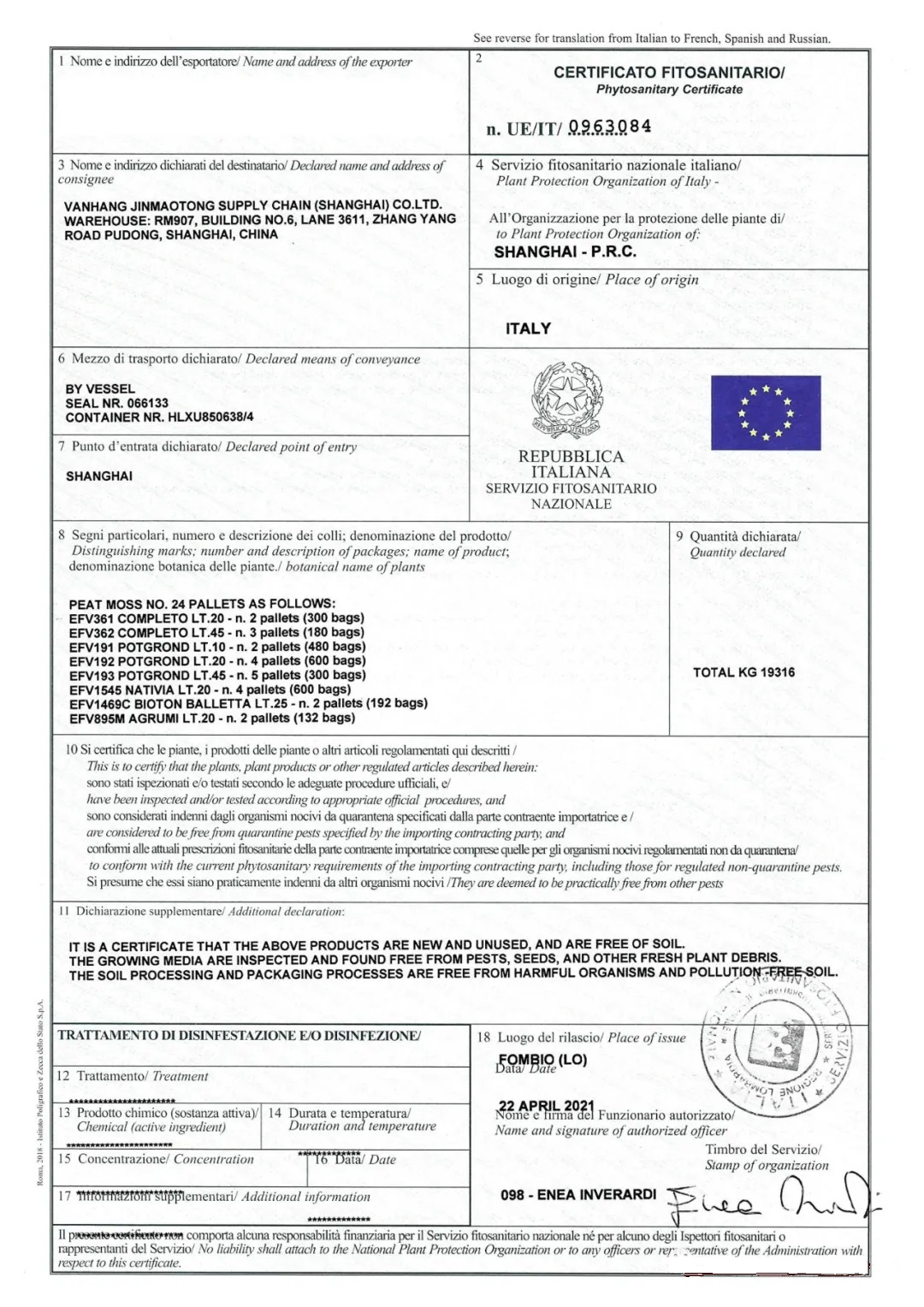
(2) Phytosanitary Certificate issued by the official authority of the exporting country
(3) Packing list
(4) Invoice
(5) Contract
(6) Bill of Lading
(7) Declaration elements, such as product name, brand, country (region) of origin, specifications, quantity/weight, total value, etc.
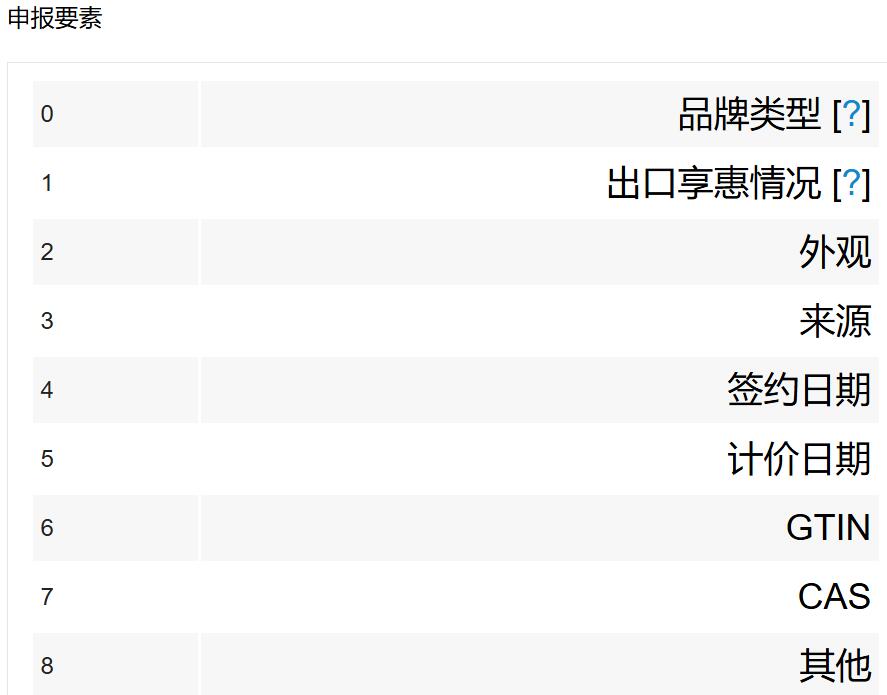
3. Sharing of customs declaration forms
● Cultivation medium quality requirements:
1. Not carrying pests listed in the "List of Quarantine Pests of Plants Entering the People's Republic of China", or other pests and alien species that pose a serious threat to agricultural and forestry production and the ecological environment.
2. It does not contain any substances other than the components of the cultivation medium, such as plant seeds, soil, animal carcasses, animal feces, poultry feathers, plant residues, and other biosafety risk substances.
3. It has never been used for cultivation or other agricultural purposes.
4. All materials in the cultivation medium should be incapable of reproduction.
● Foreign manufacturing or processing enterprises or nurseries registered with Chinese customs
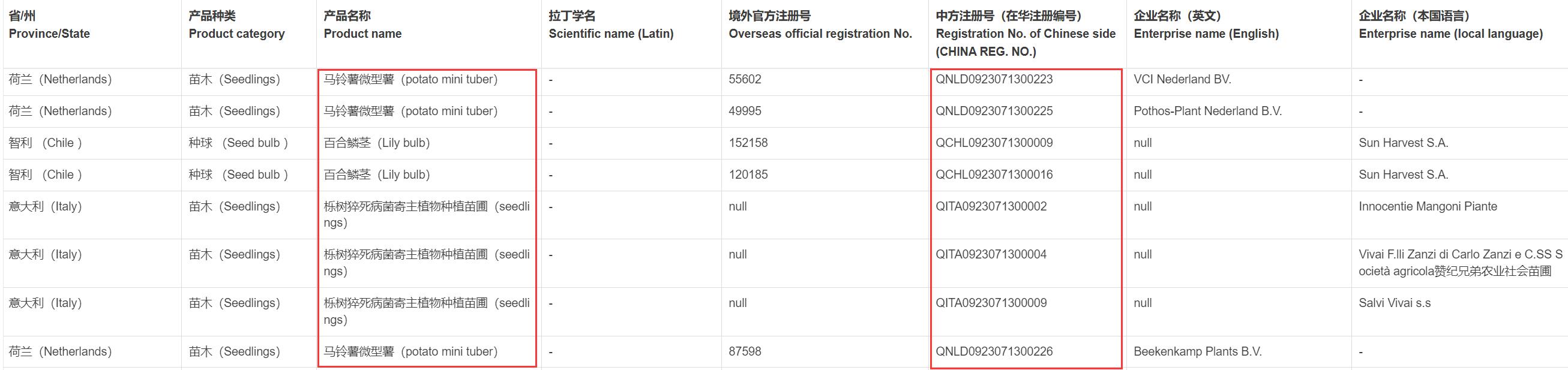
Foreign plantations (nurseries) exporting plant propagation materials to China must register with Chinese customs. If necessary, Chinese customs may dispatch quarantine personnel for pre-inspection or investigation of the origin's disease situation. Foreign phytosanitary authorities should assess nurseries and recommend qualified nurseries to Chinese customs. Chinese customs will review applications, conduct on-site inspections if necessary, and register the nurseries upon approval. The list of registered companies will be published on the official website of Chinese customs.
● Remedies available:
1. Different countries have different governance structures, legal systems, and division of responsibilities among administrative agencies. Assistance should be provided to the relevant departments and direct officials in charge of plant quarantine in the country of origin.
2. Translate, organize, and supplement necessary materials; there may be a need to notarize certain materials as required.
3. Guide applicants to submit their applications to the correct review department in China through the correct path and methods.
4. When the registration application process stalls due to communication barriers and information asymmetry, we will intervene to actively coordinate and strive to obtain a good result as soon as possible.
(Against situations where the submitted application contains false information is not eligible for relief.)
● Regulatory conditions:
1. Plantations or nurseries in the exporting country should obtain a registration number for export to China from Chinese customs (i.e., a GACC export number).
2. For plant propagation materials that are not prohibited from import , importers should obtain in advance the "Approval Form for Import of Seeds and Seedlings" or the "Approval Form for Import of Forest Tree Seeds, Seedlings and Other Plant Propagation Materials" approved by the agricultural and rural affairs or forestry and grassland departments. If the materials are declared as genetically modified, an "Agricultural Genetically Modified Organism Safety Certificate" is also required. For seeds and seedlings that are prohibited from import but require special approval, an "Import Quarantine Permit for Animals and Plants" approved by the General Administration of Customs is required in advance. The permits mentioned above are all in electronic form by default. Customs will automatically compare and verify the electronic data of the quarantine approval documents during customs declaration .
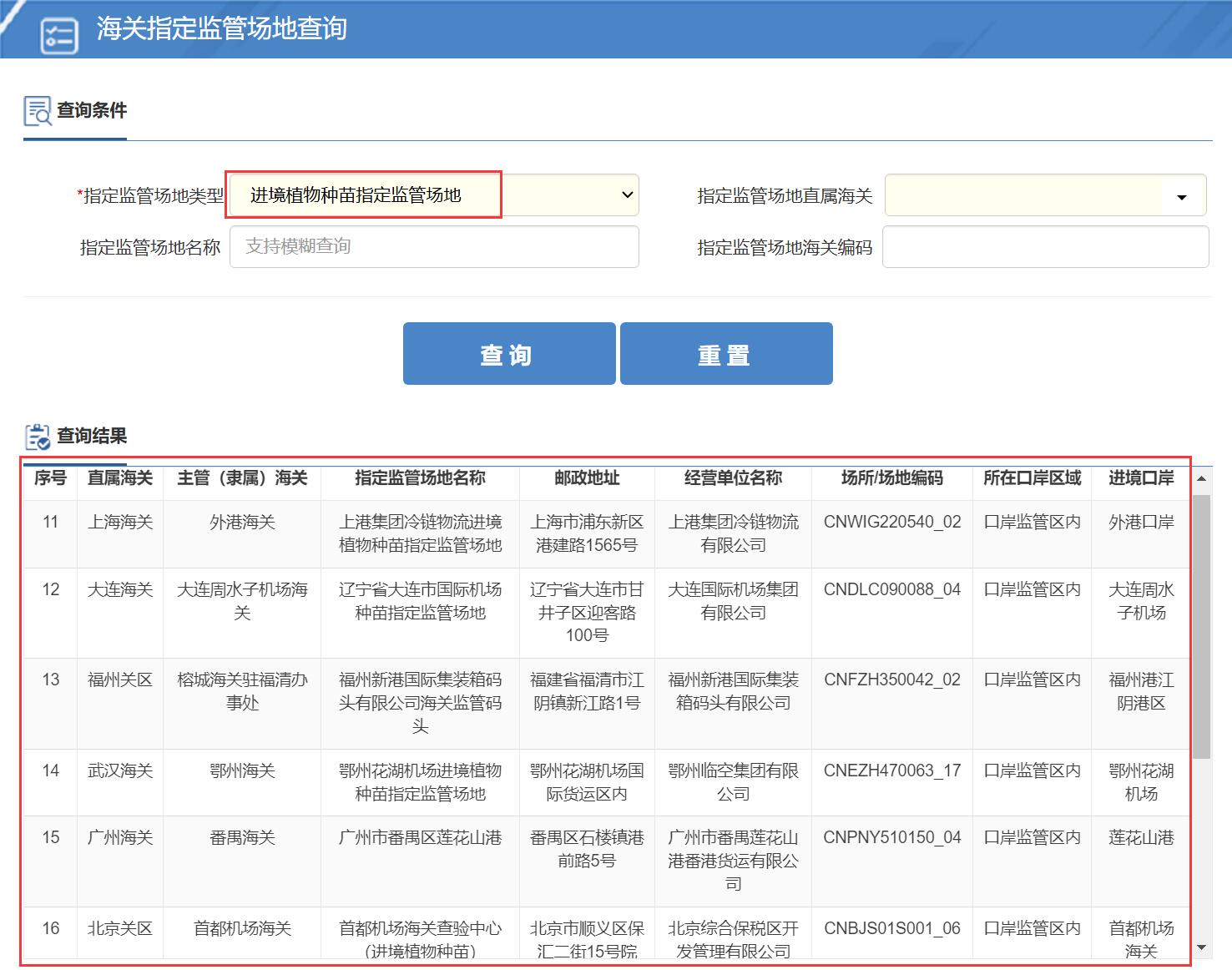
3. Plant propagation materials shall be imported through the port where the designated supervision site for imported plant seedlings is located, and the port of entry shall be consistent with the port approved by the quarantine approval.
● Propagation materials of imported plants for exhibition
Plants and imported plant propagation materials intended for exhibition must be subject to quarantine supervision by the local customs during the exhibition period and may not be used for other purposes without their consent. After the exhibition, all imported plants and plant propagation materials must be destroyed or returned. If a change of use is necessary due to special circumstances, it must be handled in accordance with normal import quarantine regulations. Plants, plant propagation materials, growing media, or packaging materials abandoned during the exhibition will be disposed of harmlessly under customs supervision. Imported plants and plant propagation materials entering bonded areas (including bonded factories and bonded warehouses) must have intact outer packaging and be subject to customs supervision.
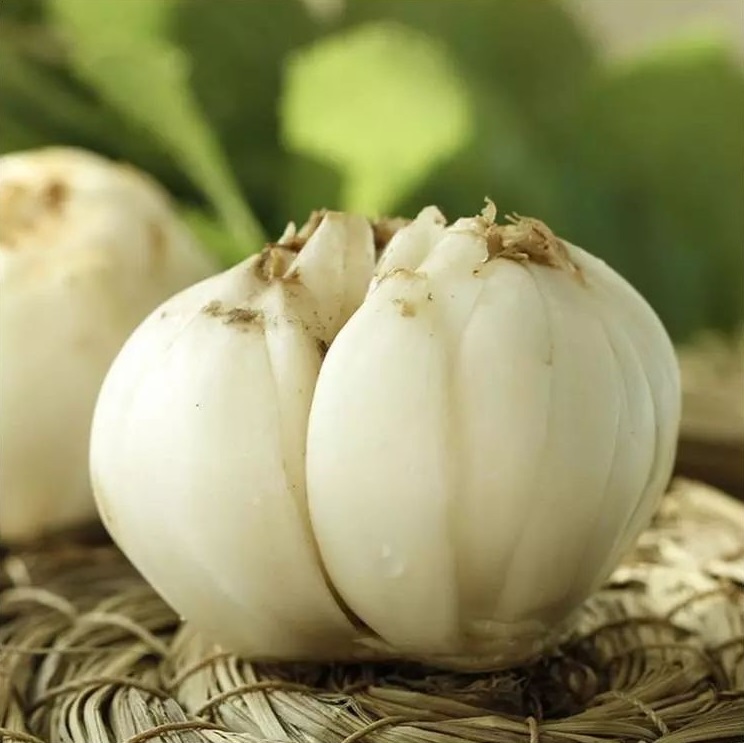
● Taking imported lily bulbs as an example:
The Customs Tariff Catalogue describes the product as follows: bulbs, tubers, root tubers, corms, root necks and rhizomes that are growing or flowering; chicory plants and their roots (excluding endangered species) (including tubers, root tubers, corms, root necks and rhizomes, excluding roots of heading 1212) (lily corms).
Customs Code: 0601200099
CIQ code: 105
13-digit customs code: 0601200099105
Regulatory requirements and required documents for customs declaration:
1. Confirm that the plantation or nursery in the exporting country has obtained an export number to China;
2. Phytosanitary Certificate issued by the official authority of the exporting country.
3. Certificate of Origin
4. The "Approval Form for Import of Forest Tree Seeds, Seedlings and Other Plant Propagation Materials" obtained by the importer from the Forestry and Grassland Administration; the default is an electronic document, and the customs will automatically compare and verify the electronic data of the quarantine approval document through the system.
5. Packing list
6. Invoice
7. Contract
8. Bill of lading: The consignee on the bill of lading and the consignee on the phytosanitary certificate issued by the overseas official phytosanitary department must be the same person.
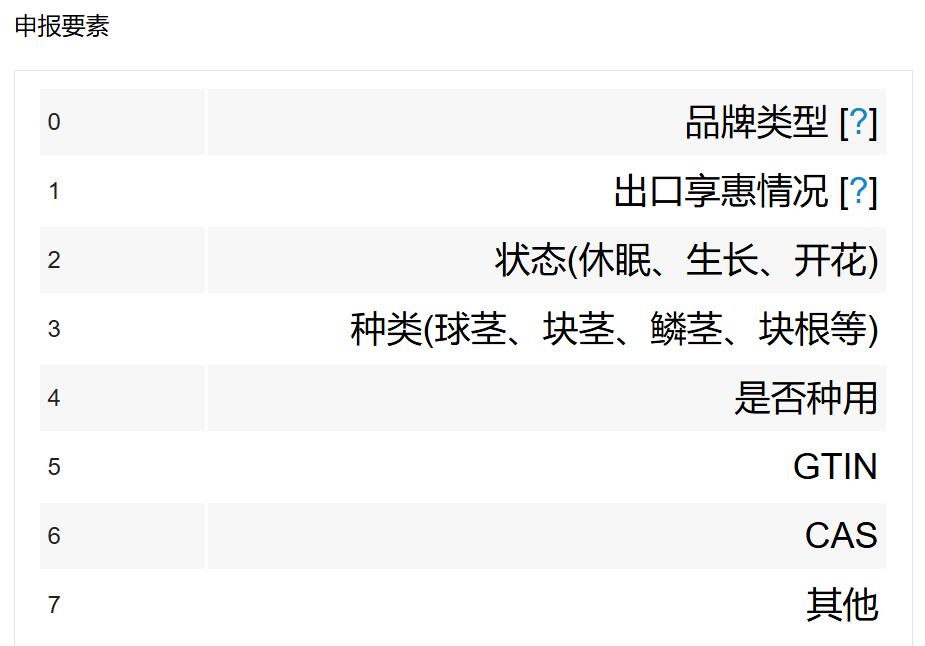
9. Application details, such as type (bulb, tuber, bulb, root, etc.) and whether it is for planting.
10. The port of entry must be consistent with the port of entry approved by the quarantine authorities.